When I spent over 20 years working in corporate environments, I didn't have words like "burnout" or "nervous system regulation" in my vocabulary. I just knew that by Thursday afternoon, the room felt heavier than it did on Monday morning. That people were shorter with each other. That the energy that drove great work in January had quietly leaked out somewhere by October.
I thought that was just how work felt. Turns out, a lot of research agrees — and it's getting worse.
A 2025 survey of Australian full-time office workers found that four in five are experiencing burnout. Beyond Blue puts it at one in two experiencing full burnout in the last year alone. And Australia ranks second in the world for workplace stress — behind only one other country.
These aren't numbers about a few struggling individuals. They're a description of how most of our workplaces feel right now.
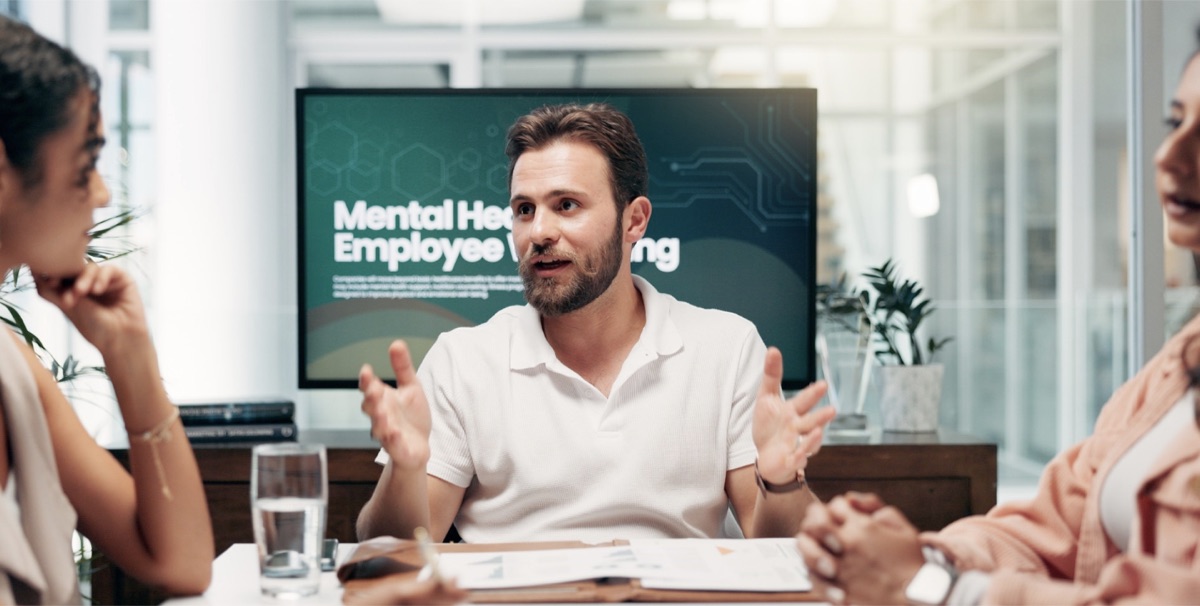
What the research actually says about mindfulness
The good news — and there is real, peer-reviewed good news — is that mindfulness-based interventions have been shown to work. Not as a feel-good bonus, but as a measurable, evidence-backed tool for reducing stress and improving performance.
A randomised controlled trial of 1,458 employees — one of the largest of its kind — found that those who undertook a mindfulness programme showed significant reductions in perceived stress in just eight weeks. Not months. Eight weeks.
Source: Digital Meditation to Target Employee Stress, PMC / National Institutes of Health, 2024
A separate 2025 meta-analysis published in Stress and Health (Wiley) reviewed randomised controlled trials of mindfulness-based programmes in the workplace and confirmed their effectiveness for reducing stress, burnout, and improving work engagement.
Mindfulness reduced anxiety levels by 30% within two months — proving to be as effective as conventional approaches to stress management.
— Goleman Emotional Intelligence Institute, 2025 research reviewWhat I find most compelling about these findings is what they tell us about how mindfulness works. It doesn't remove the workload. It doesn't change the deadline. What it does is shift how the brain appraises pressure — from threat to challenge. That's not a subtle difference. That's the difference between a team that freezes and a team that finds a way through.
This isn't a meditation retreat. It's a business decision.
I've heard the pushback. "We don't have time for this." "Our people won't go for it." "It sounds a bit out there."
I get it. I said similar things myself, once. But Safe Work Australia's own data frames the cost of inaction clearly: psychological injury claims are among the most expensive and longest to resolve of all workplace injuries. The average time off for a psychological claim is more than twice that of a physical one.
When I bring a mindfulness session into a workplace, I'm not asking anyone to sit cross-legged or chant. I'm offering tools — breathwork, grounding, simple movement, guided stillness — that people can use at their desk, in a meeting, or on the commute home. Practical. Evidence-based. And designed for people who've never done anything like this before.
The teams I work with don't come in already believing in this. They come in a little sceptical, a little stiff, and usually a little exhausted. By the end of the first session, something shifts — not because of anything magical, but because most people haven't been given permission to be still for an hour in months.
That's all it takes to start. Permission. Space. And someone to guide you through it.
If you're leading a team right now and you're watching people run on empty, I'd love to talk. Not about a grand wellness strategy — just about what one session could do for the people in your care.
The research is there. The need is there. The only question is when.